
Cognitive Behavioral Therapy for Anxiety
Anxiety is a normal part of life, but when worry, fear, or avoidance begins interfering with school, relationships, independence, or everyday activities, therapy can help.
I use Cognitive Behavioral Therapy (CBT) and exposure to help children, adolescents, and young adults better understand their anxiety, develop more flexible ways of thinking, and build confidence in their ability to handle uncomfortable emotions and uncertainty.
The goal isn't to eliminate anxiety. It's to learn how to respond to it differently so that it no longer gets in the way of living a full and meaningful life.
Types of Anxiety I Treat
Generalized Anxiety: Excessive worry about school, relationships, the future, or everyday situations.
Social Anxiety: Fear of judgment, embarrassment, or negative evaluation from others.
Panic: Intense episodes of fear with physical discomfort, often accompanied by worry about future panic attacks.
Specific Phobias: Fears of particular objects or situations, such as vomiting (emetophobia), bugs, needles, or flying.
Separation Anxiety: Excessive worry or distress about being apart from parents, caregivers, or loved ones.
Health & Illness Anxiety: Persistent fears about becoming sick or having a serious medical condition.
School-Related Anxiety & Avoidance: Anxiety that interferes with attending school, participating in class, or managing academic and social demands.

Understanding the Anxiety Cycle
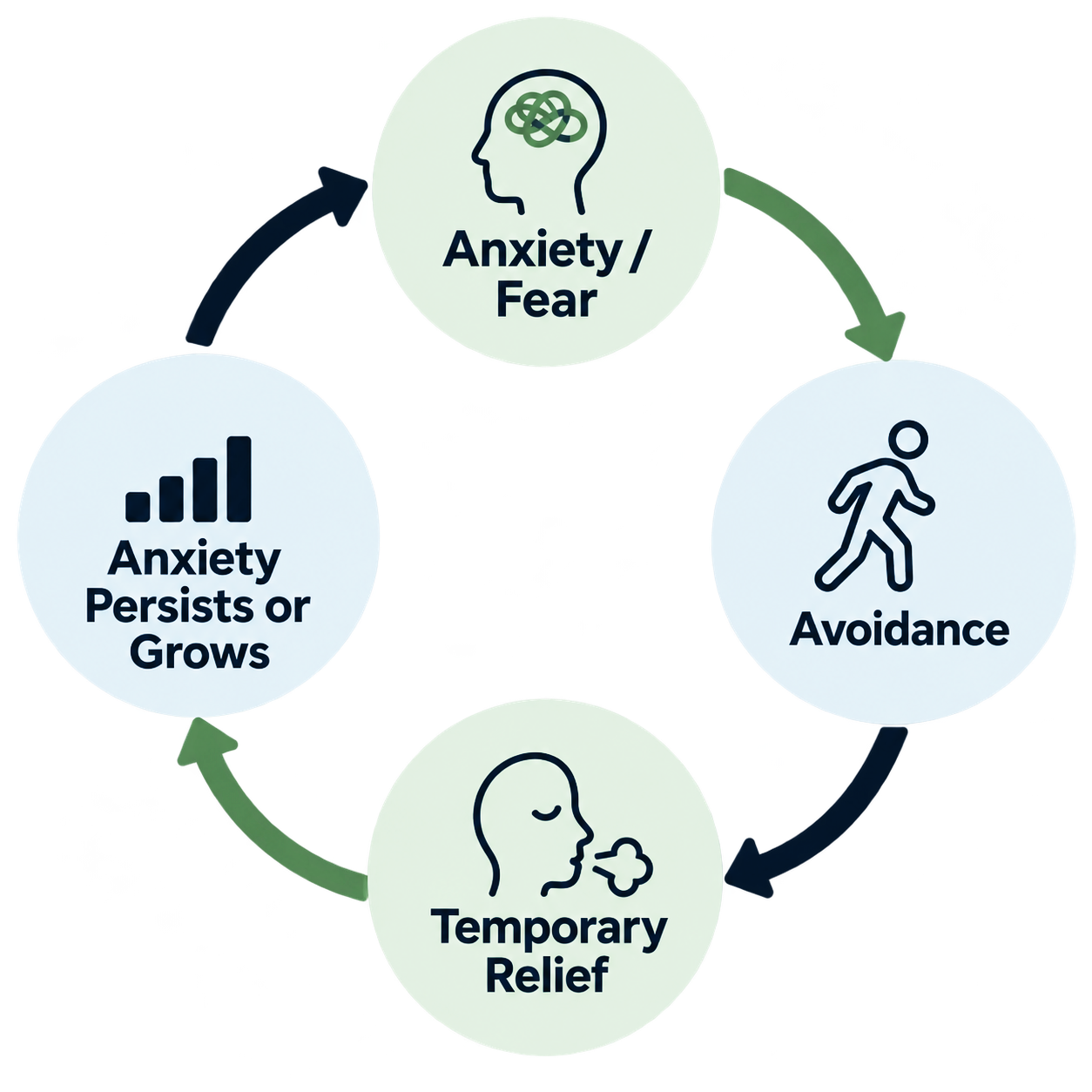
When something makes us anxious, our natural instinct is often to avoid it. Avoidance might look like staying away from uncomfortable situations, seeking reassurance, or trying to eliminate uncertainty.
While these behaviors can provide temporary relief, they reinforce anxiety over time.
The more we avoid what makes us anxious, the less opportunity we have to learn that we can handle it.
How Does CBT Help with Anxiety?
CBT helps us understand the connections between our thoughts, feelings, and behaviors, and how these patterns can unintentionally maintain anxiety.
Treatment focuses on two important skills: changing how we relate to anxious thoughts and learning to approach situations we would typically avoid.
Cognitive Strategies: Changing Our Relationship with Anxious Thoughts
Anxiety often leads us to overestimate the likelihood of something going wrong or underestimate our ability to cope.
In therapy, we practice identifying automatic anxious thoughts, examining their accuracy and helpfulness, and developing more flexible ways of thinking.
We also use cognitive defusion, which involves creating distance from our thoughts rather than automatically treating them as facts. For example, instead of thinking, "everyone thinks I am weird" we might practice recognizing, "I'm noticing the worry thought that people think I am weird".
The goal isn't to convince ourselves that everything will be okay. It's to recognize that our thoughts aren't necessarily facts and that we can choose how to respond to them.
Behavioral Strategies: Exposure & Reducing Avoidance
As illustrated in the anxiety cycle above, avoidance provides short-term relief but often keeps anxiety going.
Exposure therapy helps interrupt this cycle by gradually and intentionally approaching feared situations rather than avoiding them. In fact, this idea of approaching rather than avoiding is what inspired the name Approach Psychotherapy.
Together, we create opportunities to practice facing fears in manageable steps. Depending on the type of anxiety, this might involve speaking up in class, spending time away from caregivers, approaching feared objects or situations, or learning to tolerate uncertainty without seeking reassurance.
With practice, clients learn that they can handle discomfort and uncertainty without relying on avoidance. Over time, this helps anxiety have less influence over their choices.
Moving Toward a Meaningful Life
Anxiety can make our worlds smaller. It can hold us back from friendships, independence, new experiences, and the activities that matter most to us.
Drawing from Acceptance and Commitment Therapy (ACT), we work on identifying personal values and taking meaningful action toward them, even when uncomfortable thoughts and feelings show up.
Rather than waiting until anxiety goes away to participate in life, we practice making room for discomfort while moving toward the people, experiences, and goals that give our lives meaning.
Ultimately, the goal isn't just to feel less anxious. It's to build a life that feels fulfilling, with anxiety no longer in the driver's seat.
Interested in learning more about evidence-based therapy for anxiety? Reach out to discuss what therapy could look like for you.